
Nutrition and Running
Running on an empty stomach: how many kilometers can I run without eating?
Find out how far it may be reasonable to run on an empty stomach, which precautions matter and when it is better to eat before training.
Read articlePacia Journal
Training, planning and habits explained clearly to help you make better running decisions.

Nutrition and Running
Find out how far it may be reasonable to run on an empty stomach, which precautions matter and when it is better to eat before training.
Read articleMore from Pacia Journal

Equipment
Do compression socks for running work? Explore the benefits, myths, types and pressure levels according to science.

Training
Understand what long runs are for, how far to run, how to increase distance and why more kilometers do not always mean a better workout.

Health and running
Understand how running and physical activity help people with type 1 and type 2 diabetes, their benefits, and how precautions differ for each condition.

Training
Learn what tapering means, when to start, and how to reduce volume without abandoning intensity before a 5K, 10K, half marathon or marathon.

Training
Understand how interval training works, what fast repetitions are for, how to manage recovery, and how to use a watch during training.

Training
Learn what running training zones are, what Z1 through Z5 mean, and how to use heart rate, pace, and perceived effort in your training.

Training
Stretching or warming up before a run? Learn what the science says and what to do before and after easy runs, fast workouts, and races.

Training
Should you run 2, 3, 4, or 5 times a week? Learn how to choose your running frequency based on your experience, goals, and ability to recover.

Equipment
Discover the differences between daily trainers, cushioning, stability and carbon-plated shoes, and learn which make most sense for beginner, intermediate and advanced runners.

Training · Body composition
Learn how running contributes to weight and body fat loss, why nutrition matters, and the role of consistency in training.

Training
Learn how heat, humidity, and cold affect running and how to adjust effort, timing, hydration, and clothing without relying on a fixed pace rule.

Training · Zone 2
Learn what Zone 2 means in running, how to identify it through heart rate and effort, and when it belongs in training.

Beginners · First 5K
Learn how to start running from zero, combine walking and running, build a sustainable routine, and progress toward your first 5K.

Technique · Biomechanics
Understand cadence, why 180 steps per minute is not a universal rule, and when an adjustment may make sense.

Training · Hydration
A practical strategy based on duration, weather and your individual sweat rate.


Technology · Behavior
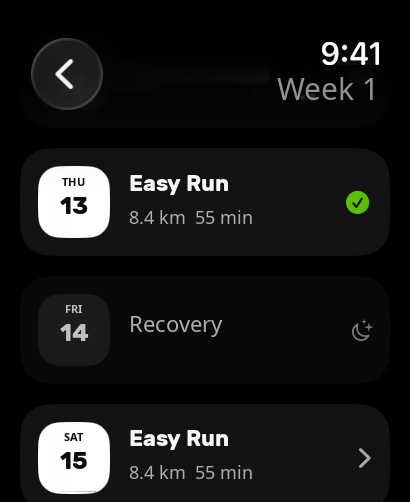
Watches, apps and metrics can make exercise clearer and more consistent—when data guides decisions without replacing the body.

Nutrition · Marathon
Learn what to eat during a marathon, how much carbohydrate to consume and whether rapadura can be an alternative to sports gels.

Training · Pace
Understand running pace, calculate minutes per kilometre and use the metric to interpret training and races more clearly.