
Technology · Behavior
Technology and exercise: when data helps—and when it gets in the way.
The best sports technology is not the one that displays the most numbers. It helps you make a better decision, then gets out of the way.
Translated from the original Portuguese article


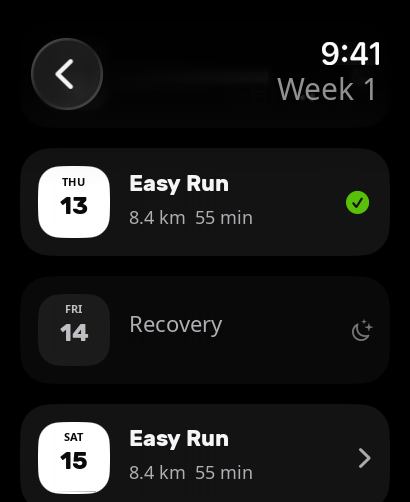
A few decades ago, tracking a workout required a stopwatch, paper and memory. A watch can now record distance, pace, heart rate, sleep and recovery estimates. The change is remarkable. The challenge is deciding what deserves attention.
Technology works best when it reduces friction
The value of an app or watch is not only measurement. It is making the next behavior easier: showing the right workout, organizing the week, recording what was completed and simplifying execution. A 2022 umbrella review found significant increases in physical activity from tracker-based interventions, especially when feedback and goals formed part of a clear strategy.
Good data reduces uncertainty. Data without context simply creates one more thing to monitor.
Measurement is not understanding
Steps, pace and heart rate are observations. Readiness, load, calories and recovery are algorithmic interpretations. A 2024 umbrella review covering 249 validation studies found comparatively consistent heart-rate performance, but meaningful variation and error in activity intensity, energy expenditure, VO₂ max and sleep. A wearable is useful; it is not a laboratory on your wrist.
Look for trends, not absolute precision
One high-heart-rate workout may reflect heat, stress, caffeine, fatigue or sensor error. A pattern repeated over several weeks deserves more attention. Sleep and recovery scores can prompt useful questions, but should not cancel a clear bodily signal.
More metrics can mean less clarity
When every measure becomes a target, exercise can turn into a daily audit. Closing rings and protecting streaks may motivate, but can also create guilt or encourage training while sick. Choose a small set of metrics tied to the current question: weekly frequency for consistency; volume, intensity distribution and response for race preparation.
Automation should preserve autonomy
A good tool recommends, explains and allows adjustment. Training still exists alongside work, family, weather, pain and unexpected events that no algorithm fully knows. Useful automation is reversible: it organizes the plan, adapts when needed and shows why, while the runner remains able to decide differently.
Exercise remains the essential part
The World Health Organization recommends 150–300 minutes of moderate or 75–150 minutes of vigorous aerobic activity per week for adults, plus regular strengthening. No sensor replaces the behavior. Ask whether a feature helps you start, execute or learn from training; if it only adds screen time, it may be noise.
A practical protocol
Before training, use technology to know what to do. During it, watch only what is needed for safe execution. Afterwards, record what happened and how you felt. In the weekly review, look for trends—not verdicts. The best relationship between technology and exercise is quiet: less improvisation before, less distraction during and more understanding afterwards.
References
- Ferguson et al. — Effectiveness of wearable activity trackers to increase physical activity (2022)
- Doherty et al. — Keeping Pace with Wearables: accuracy of consumer wearable technologies (2024)
- Fuller et al. — Reliability and validity of commercially available wearable devices (2020)
- World Health Organization — Guidelines on physical activity and sedentary behaviour (2020)
This article is informational. Consumer-device metrics do not replace medical assessment, diagnosis or individualized professional guidance.

Beginners · First 5K
How to start running from zero: a complete guide to your first 5K
Training · Pace
Running pace: what it is, how to calculate it and how to use it

Technique · Biomechanics
Running cadence: is there an ideal step rate?
Technology with purpose
Less time organizing. More time training.
Pacia turns your goal, routine and preferences into a clear plan on iPhone and Apple Watch.
Download on the App Store