
Technique · Biomechanics
Running cadence: is there an ideal step rate?
Cadence is useful information about how you run. The problem begins when a reference number becomes a rule for everyone.
Translated from the original Portuguese article
Cadence is context, not an isolated target.
Step frequency — or cadence — is the total number of steps taken per minute. It is easy to measure and looks reassuringly objective, but on its own it cannot tell whether someone runs well or poorly.
Cadence and stride length work together
Speed comes from the combination of step frequency and step length. At the same pace, raising cadence usually makes each step slightly shorter. Lengthening the stride while maintaining speed usually lowers cadence.
This is why cadence normally rises as we run faster. Comparing an easy run with a short race — or two runners moving at different speeds — without accounting for pace leads to poor conclusions.
The more useful question is not “what number should I reach?” but “how does my stride change with pace and terrain?”
Where did 180 steps per minute come from?
The number became popular after observations of elite runners. A trait seen in fast athletes during competition was then turned into a universal prescription for people with very different heights, histories and training paces.
A cadence of 180 may be natural for one runner at one pace. For another person on an easy run, 160 or 170 may be comfortable and efficient. Research suggests runners tend to select a stride pattern close to their own energetic optimum.
Does a higher step rate reduce impact?
In a controlled study, Heiderscheit and colleagues found that modest increases in step rate at the same speed reduced some loads at the hip and knee. Reviews have reported similar changes in several biomechanical variables when cadence rises and stride length shortens.
That does not prove every runner should increase cadence or that doing so prevents injury. A 2022 systematic review found insufficient evidence for firm conclusions about long-term injury and performance outcomes; many studies measured immediate laboratory responses.
When is cadence worth watching?
Cadence can be useful when there is recurring pain, a stride that clearly reaches far ahead of the body, large changes between comparable runs, or a recommendation from a professional after a running assessment. It can also add context to fatigue late in a session.
The number is not a diagnosis. Pain requires proper assessment, and no watch metric replaces a qualified physiotherapist, physician or coach.
How to measure it
Sports watches usually show total steps per minute. Without one, count all foot contacts for 30 seconds and multiply by two. Record pace, terrain and perceived effort as well; without context, the value loses meaning.
If there is a reason to adjust, start small
Use your usual cadence as the baseline instead of jumping straight to 180. An initial increase of about 5% is easier to control and resembles the subtle changes studied in laboratories.
A runner at 162 steps per minute on an easy run might briefly try about 170 at the same pace. Use one- to three-minute intervals, stay relaxed, and stop if pain appears or the movement feels forced.
Watch trends, not an isolated number
Cadence is most useful when you compare yourself with yourself under similar conditions. Pace, hills, height, fatigue and surface all influence the value. Treat it as one part of movement, not a score: use it to understand your running, not to consciously correct every step.
References
- Heiderscheit et al. — Effects of Step Rate Manipulation on Joint Mechanics during Running (2011)
- Anderson et al. — Effect of Changing Running Step Rate on Injury, Performance and Biomechanics (2022)
- Moore — Is There an Economical Running Technique? (2016)
- Schubert, Kempf e Heiderscheit — Influence of Stride Frequency and Length on Running Mechanics (2014)
This article is for information only and does not replace individual assessment. Technique changes related to pain, injury or functional limitation should be supervised by a qualified professional.

Beginners · First 5K
How to start running from zero: a complete guide to your first 5K
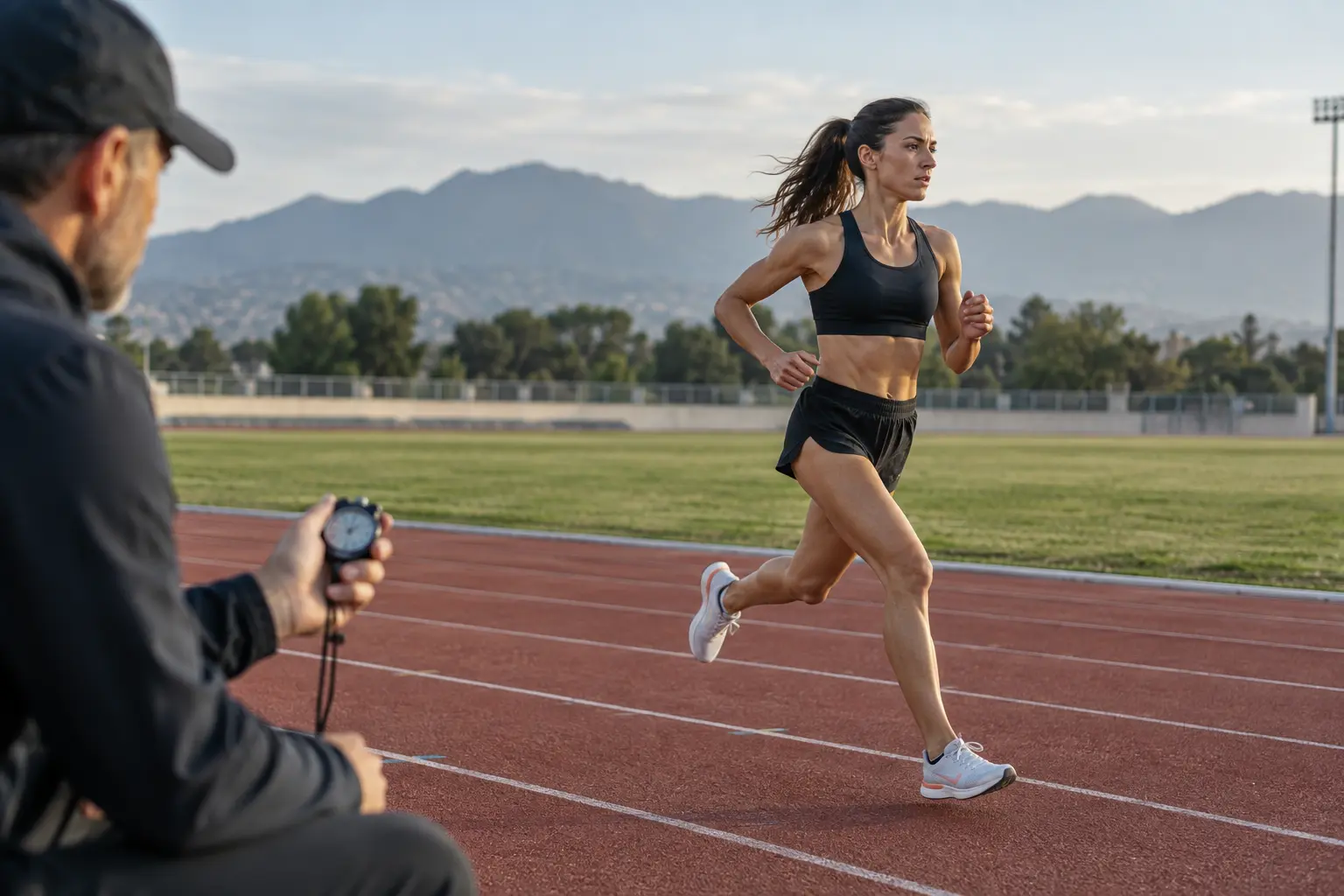
Training · Pace
Running pace: what it is, how to calculate it and how to use it
Technology · Behavior
Technology and exercise: when data helps—and when it gets in the way
Fewer isolated numbers
Context turns data into decisions.
Pacia organizes your goal, routine and workouts into a clear plan on iPhone and Apple Watch.
Download on the App Store